
How to Make Peanut Sauce for Spring Rolls – Easy Vietnamese Recipe
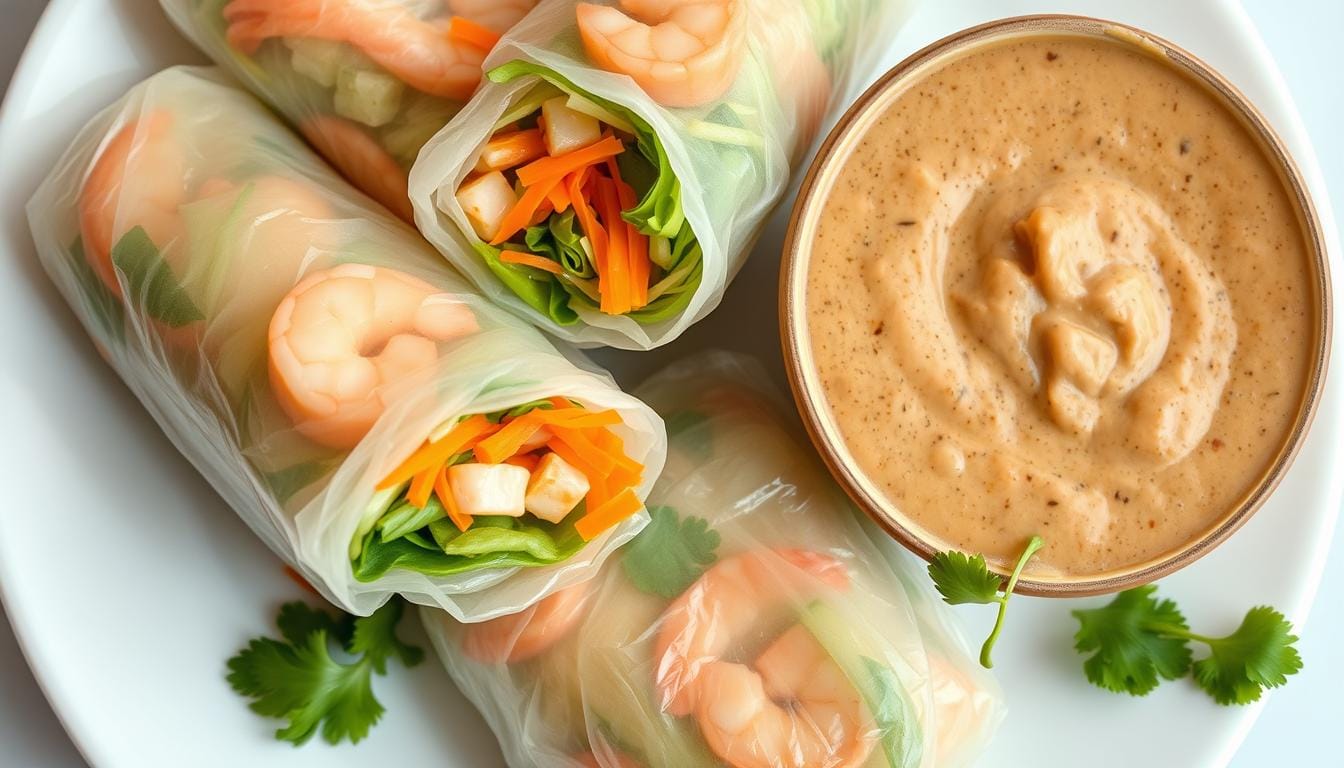
The first time I tasted authentic Vietnamese spring rolls with their rich, creamy peanut sauce, my culinary world transformed. That moment in a small restaurant in San Francisco’s vibrant Chinatown sparked a passion for recreating this incredible Vietnamese classic right in my own kitchen.
Vietnamese spring rolls are more than just a dish — they’re a sensory experience that connects you to generations of culinary tradition. The peanut dipping sauce, with its complex layers of flavor, turns simple spring roll ingredients into an extraordinary meal that transports your taste buds to the bustling street markets of Vietnam.
In this guide, you’ll learn exactly how to make peanut sauce for spring rolls — smooth, nutty, and perfectly balanced — just like the ones served in authentic Vietnamese kitchens. Whether you’re a seasoned home cook or a curious food lover, this spring rolls recipe will show you how to master an unforgettable dip that elevates every bite.
Let’s dive into the steps to create this classic Vietnamese peanut sauce at home.
Introduction to Vietnamese Peanut Sauce
Vietnamese spring rolls are not complete without their perfect match: a rich, creamy peanut sauce. This sauce makes the dish unforgettable. It’s a key part of Vietnamese food, turning simple ingredients into a vibrant dish.
Origins of Peanut Sauce in Vietnamese Cuisine
Peanut sauce became a favorite in Vietnamese cooking through cultural exchanges. It combines local ingredients with traditional methods. This sauce tells the story of Vietnam’s rich food history.
- Developed in Southeast Asian kitchens
- Blends local ingredients with traditional cooking methods
- Reflects the complexity of Vietnamese flavor profiles
Why Peanut Sauce is Essential for Spring Rolls
The peanut sauce adds a key flavor when you eat Vietnamese spring rolls. Its creamy texture and nutty taste go well with the fresh veggies and proteins inside. It makes the rolls even more delicious.
Different Types of Vietnamese Dipping Sauces
Vietnamese food has many dipping sauces, but peanut sauce is special. It has a unique, rich flavor that stands out. It’s different from fish sauce and fermented anchovy sauces.
| Sauce Type | Primary Ingredients | Flavor Profile |
|---|---|---|
| Peanut Sauce | Peanut butter, soy sauce, garlic | Creamy, nutty, slightly sweet |
| Nước Mắm | Fish sauce, lime, sugar | Tangy, salty, umami |
| Nước Chấm Mắm Nêm | Fermented anchovy, chili | Intense, spicy, complex |
Essential Ingredients for Authentic Peanut Sauce
Making a true Vietnamese peanut sauce needs the right mix of ingredients. The perfect blend turns simple parts into a rich, tasty sauce. This sauce makes your spring rolls truly special.
Here are the key ingredients for the best peanut sauce:
- Peanut Butter: Pick a creamy, unsweetened type for the best taste and texture
- Hoisin Sauce: Adds depth and a hint of sweetness to your sauce
- Fresh garlic, minced
- Finely chopped shallots
- Red chili for a spicy kick
- Warm water for the right consistency
Top chefs say choose high-quality ingredients. Organic peanut butter without sugars is best for authentic Vietnamese sauce. The mix of creamy, sweet, and spicy makes the sauce unique.
You can also add extra ingredients to your sauce:
- Coconut milk for extra creaminess
- Lime juice for a fresh taste
- Soy sauce for more umami
Knowing how each ingredient works helps you make a sauce that’s unforgettable. It will perfectly match your spring rolls.
Kitchen Tools and Equipment Needed
To make a tasty peanut sauce for your spring rolls, you’ll need some key kitchen tools. Whether you’re new to cooking or have lots of experience, the right tools make cooking fun and easy.
Before starting your spring rolls recipe, collect these basic tools. They’re crucial for a successful cooking experience.
Basic Utensils for Peanut Sauce Preparation
- Saucepan: A medium-sized saucepan for heating and mixing ingredients
- Whisk: Essential for blending sauce components smoothly
- Measuring cups and spoons for precise ingredient quantities
- Cutting board for chopping ingredients
- Sharp knife for mincing garlic or ginger
Optional Equipment for Larger Batches
If you’re making a lot of peanut sauce for many spring rolls, you might want these extra tools:
| Equipment | Purpose |
|---|---|
| Food processor | Quick blending of ingredients |
| Immersion blender | Smooth sauce consistency |
| Large mixing bowl | Preparing bigger sauce batches |
| Storage containers | Preserving extra sauce |
Getting these tools will help you make a great spring rolls recipe with less effort. Many home cooks already have most of these items.
How to Make Peanut Sauce for Spring Rolls
Making peanut sauce for spring rolls is simple. This sauce adds amazing flavor to your spring rolls. With just a few ingredients and some care, you can make a great dipping sauce at home.
To begin, collect your ingredients. You’ll need:
- Creamy peanut butter
- Soy sauce
- Rice vinegar
- Honey or brown sugar
- Minced garlic
- Ginger (optional)
- Warm water
Getting the right consistency is key. Start by mixing peanut butter with soy sauce in a bowl. Add warm water slowly while stirring. This makes the sauce smooth and just right for your spring rolls.
For the best taste, follow these steps:
- Combine liquid ingredients first
- Whisk until completely smooth
- Taste and adjust seasonings
- Let sauce rest for 10-15 minutes before serving
Pro tip: If your sauce gets too thick, add a bit more warm water. This will get it just right.
Your homemade peanut sauce will make your spring rolls taste like they’re from a restaurant. With a little practice, you’ll be making this tasty Vietnamese sauce like a pro.
Tips for Achieving the Perfect Consistency
Making the perfect peanut sauce for spring rolls takes skill. The right consistency can make your dish amazing. When you learn to make peanut sauce, knowing about texture and thickness is key.
Getting the sauce’s texture right involves a few important techniques. These will help you make a smooth, tasty dipping sauce every time.
Adjusting Thickness Like a Pro
When making peanut sauce, controlling its consistency is important. Here are some expert tips:
- Use a cornstarch slurry to thicken the sauce quickly
- Add warm water to thin out an overly dense sauce
- Incorporate coconut milk for a richer, more complex texture
- Whisk continuously to prevent clumping
Troubleshooting Common Sauce Challenges
Even experienced cooks face issues with peanut sauce. Here are solutions to common problems:
- Separated sauce: Vigorous whisking can help recombine ingredients
- Too thick sauce: Gradually add warm water or broth
- Grainy texture: Strain through a fine-mesh sieve
- Bland flavor: Adjust with extra lime juice or soy sauce
Remember, practice makes perfect when making peanut sauce for spring rolls. Each batch will help you get better at finding the perfect consistency.
Customizing Your Peanut Sauce
Making the perfect peanut sauce for your spring rolls is a fun journey. You can change it up with simple tweaks. These changes add new flavors and make your sauce special.
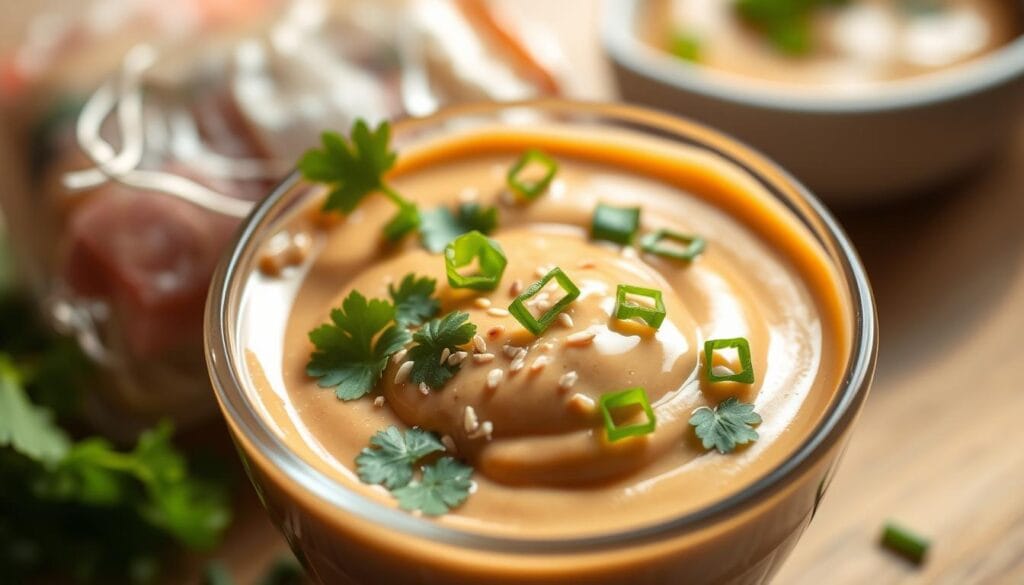
- Spice Level Modifications
- Add sriracha for extra heat
- Incorporate red pepper flakes
- Use cayenne pepper for intense spiciness
- Flavor Enhancers
- Fresh lime juice for brightness
- Fish sauce for umami depth
- Sesame oil for nutty undertones
Want to make your spring rolls recipe fit your taste? Try these swaps:
| Dietary Need | Substitution |
|---|---|
| Gluten-Free | Use tamari instead of soy sauce |
| Vegan | Replace fish sauce with soy sauce or coconut aminos |
| Low-Sodium | Reduce salt content and use low-sodium soy sauce |
Don’t be afraid to try new things with your peanut sauce. Start with small changes and taste as you go. This way, you keep the true Vietnamese taste while making it your own.
Storage and Make-Ahead Tips
Getting your homemade peanut sauce ready for veg spring rolls is just the start. Storing it right is key to keep its flavor and texture. These tips will help you keep your sauce fresh and delicious, whether you’re prepping meals or making a big batch.
Your peanut sauce is a great match for veg spring rolls and can be made ahead of time. The trick is to store it right to keep its rich, nutty taste.
Refrigeration Techniques
Here’s how to store your peanut sauce:
- Use an airtight container with a tight-fitting lid
- Store in the refrigerator for up to 5 days
- Keep the sauce away from strong-smelling foods
Freezing Your Sauce
Freezing is a great way to keep your peanut sauce fresh:
- Cool the sauce completely before freezing
- Transfer to freezer-safe containers
- Leave some space at the top for expansion
- Freeze for up to 3 months
Reheating Instructions
Here’s how to warm up your stored peanut sauce:
- Thaw frozen sauce in the refrigerator overnight
- Stir well before reheating
- Warm gently in a saucepan over low heat
- Add a small amount of water if the sauce seems too thick
Pro tip: Always check the sauce’s consistency and taste after storage. A quick whisk can help restore its original smooth texture, making it perfect for your next veg spring roll feast.
Dietary Modifications and Substitutions
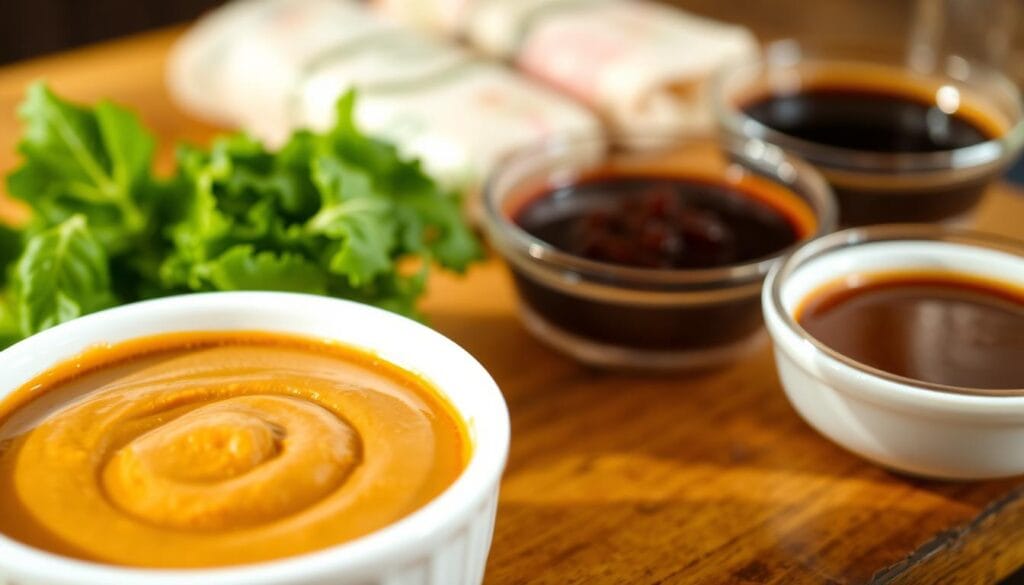
Creating a versatile peanut sauce for veg spring rolls means adapting to different dietary needs. Whether you have allergies, dietary restrictions, or specific health goals, you can modify the sauce to suit your requirements.
For those with nut allergies, several substitutions can transform your veg spring roll sauce:
- Sunflower seed butter provides a similar creamy texture
- Tahini offers a rich, nutty alternative
- Soy nut butter works for those avoiding traditional nuts
Reducing sugar content is simple with these alternatives:
- Use monk fruit sweetener instead of honey
- Replace sugar with stevia
- Incorporate pureed dates for natural sweetness
Vegan options can easily replace traditional ingredients. Coconut aminos can substitute fish sauce, while nutritional yeast adds depth to the sauce’s flavor profile. For those avoiding animal products, plant-based alternatives ensure your veg spring roll sauce remains delicious and inclusive.
When making substitutions, start with small quantities and adjust to taste. Each alternative will slightly change the sauce’s flavor and consistency, so experimentation is key to finding your perfect version.
Serving Suggestions and Pairing Ideas
Your Vietnamese peanut sauce is incredibly versatile. It can make many dishes better than just traditional Vietnamese spring rolls. This sauce adds a rich, nutty flavor to your food.
Try these exciting ways to make your meals better:
- Dip fresh Vietnamese spring rolls for an authentic taste
- Drizzle over roasted vegetables for added depth
- Use as a salad dressing for a protein-packed meal
- Enhance noodle bowls with a generous splash
- Serve as a condiment for grilled tofu or tempeh
When you’re hosting a party, think about making a colorful platter. Place Vietnamese spring rolls around a bowl of peanut sauce. This lets guests pick how much sauce they want.
The sauce’s creamy texture and nutty taste go well with:
- Crispy vegetable spring rolls
- Steamed dumplings
- Grilled protein alternatives
- Fresh garden salads
Pro tip: Try adding garnishes like chopped cilantro, crushed peanuts, or sliced green onions. They make your dish look and taste better.
Health Benefits and Nutritional Information
Explore the nutritional wonders of peanut sauce, a tasty addition to your spring rolls. It’s not just delicious; it’s also packed with health benefits.
Peanut butter, the main ingredient in most peanut sauces, is a nutritional powerhouse. It’s rich in protein, which is great for muscles and keeps you full. The healthy fats in natural peanut butter also boost heart health and give you lasting energy.
- Protein content: Approximately 8 grams per 2 tablespoon serving
- Healthy monounsaturated and polyunsaturated fats
- Rich in vitamin E, magnesium, and antioxidants
When making your peanut sauce, think about these nutritional benefits:
- Opt for natural, unsweetened peanut butter
- Add coconut milk for extra nutrients
- Include fresh herbs for more vitamins
Pro tip: Homemade peanut sauce lets you control what goes into it and avoid unwanted additives.
If you’re watching your diet, peanut sauce can be adjusted to fit your needs. Use low-sodium soy sauce, sugar-free options, and plant-based milk to make it healthier.
While tasty, peanut sauce is high in calories. Enjoy it in moderation to get the most out of its flavor and health benefits.
Conclusion
Learning to make peanut sauce for spring rolls is more than a skill. It’s a dive into Vietnamese cuisine’s deep flavors. You’ll find that making a tasty sauce is easier than you think. With a few ingredients and simple steps, you can turn simple spring rolls into a special meal.
This peanut sauce is great for more than just spring rolls. Use it as a dip, salad dressing, or for marinating meats. Its mix of nutty, salty, and sweet flavors makes it a must-have in your kitchen. Try adjusting ingredients and adding your own twist to make it your own.
Great cooking comes from passion, practice, and a love for trying new things. Your homemade peanut sauce connects you to Vietnamese cooking traditions. Whether it’s for a quick dinner or a big gathering, this sauce will wow your guests and please your taste buds. So, get your ingredients ready, dive in, and make your own authentic Vietnamese peanut sauce.