
Pasta al Limone Recipe – The Best Italian Lemon Butter Pasta
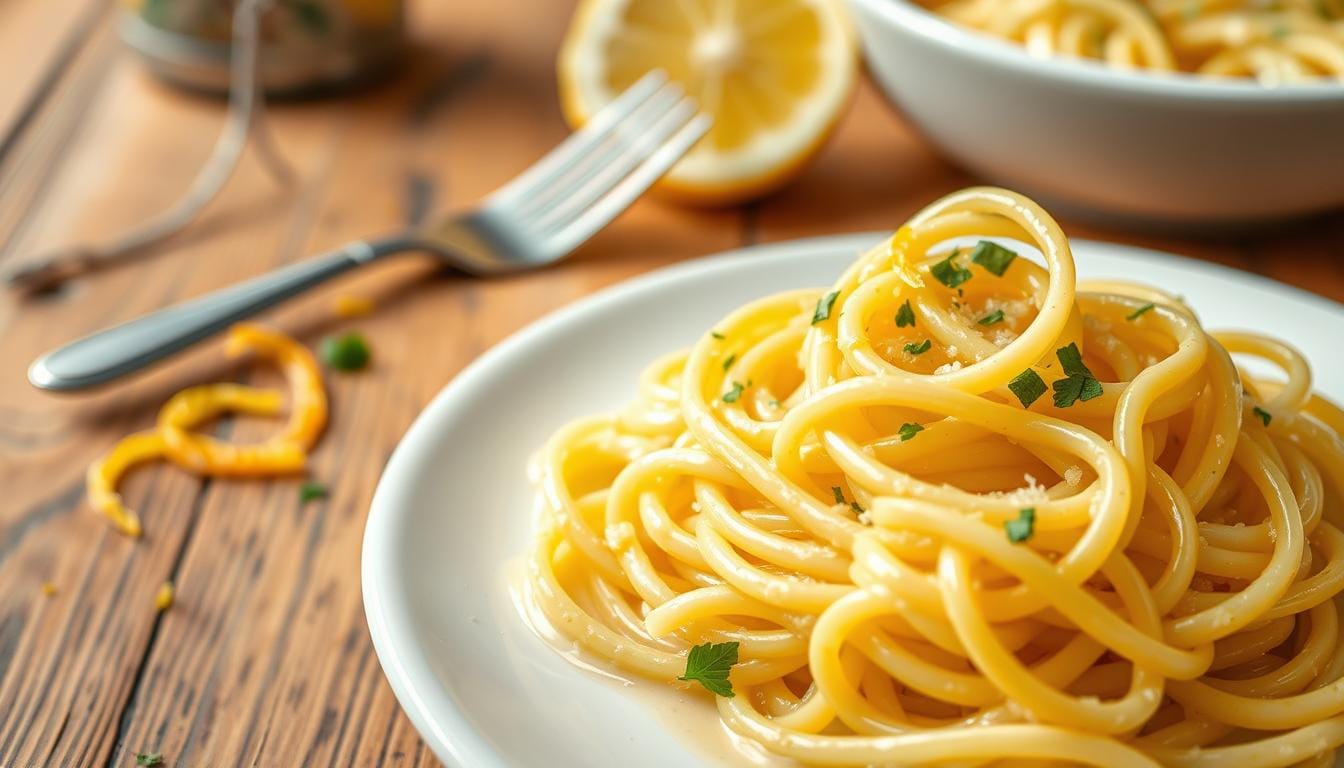
Every kitchen has a special recipe that turns simple ingredients into something amazing. For me, pasta al limone is that magic. It brings the taste of sunny Italian coastlines to your table in just 20 minutes.
This Italian lemon pasta recipe is more than just a dish — it’s a celebration of simplicity. Fresh lemons, creamy butter, and perfectly cooked pasta come together to create a creamy pasta al limone that feels both fancy and easy to make. It’s perfect for a quick dinner or a sophisticated lunch.
Imagine a dish that can warm you up in winter or cool you down in summer. That’s authentic lemon spaghetti — a meal that shows how a few quality ingredients can make food unforgettable.
Understanding the Classic Italian Lemon Pasta
Pasta al limone is a journey through Southern Italy’s favorite lemon pasta dishes. It’s a simple yet elegant recipe. It shows the beauty of Mediterranean cooking with its bright, zesty flavors and few ingredients.
Origins of Pasta al Limone
The Amalfi Coast is where pasta al limone comes from. Here, lemons grow in abundance. Coastal Italian regions made this dish with fresh, local ingredients.
Traditional lemon pasta dishes started in home kitchens. Cooks turned simple pantry items into amazing meals.
Mediterranean Culinary Essence
Exploring pasta al limone shows its Mediterranean roots. It’s known for:
- Minimal, high-quality ingredients
- Fresh, seasonal produce
- Simple preparation methods
- Bright, clean flavor profiles
Traditional vs Modern Variations
Authentic pasta al limone recipes are different from modern ones. Here’s a comparison:
| Traditional Method | Modern Variation |
|---|---|
| Lemon, pasta, cheese | Lemon, cream, herbs, protein |
| No cream | Optional cream addition |
| Regional ingredients | Global ingredient adaptations |
Whether you like traditional or modern, pasta al limone is a joy. It celebrates the simplicity of Italian cooking.
Essential Ingredients for Authentic Pasta al Limone Recipe
To make the perfect lemon pasta sauce, you need the right ingredients. These ingredients should bring out the bright flavors of this Italian classic. Start by picking high-quality parts that blend well together.
Key Ingredients for Lemon Pasta Sauce
- Pasta: Choose long, elegant noodles like spaghetti or linguine to hold the sauce well
- Fresh, unwaxed lemons for the best zest and juice
- Premium butter or extra virgin olive oil
- Aged Parmesan or Pecorino Romano cheese
- Starchy pasta water for a smooth sauce
The secret to a great lemon pasta sauce is in the ingredients. Unwaxed lemons add a strong citrus flavor. Fresh, high-fat butter makes the sauce creamy and clingy.
Ingredient Selection Tips
- Look for lemons with bright, smooth skin for the best zest
- Go for freshly grated Parmesan for a richer taste
- Use pasta water to mix your lemon pasta sauce
Pro tip: The secret to an exceptional lemon pasta sauce is balancing citrus brightness with rich, creamy elements.
Your choice of ingredients will make your pasta al limone deep and true to its roots. Each part is key to a dish that feels like a trip to the Mediterranean.
The Secret to Perfect Lemon Pasta Sauce
Making a great lemon pasta sauce is more than just mixing stuff. It’s about finding the right balance of flavors and techniques. These steps turn simple ingredients into a dish that’s truly special.
There are a few key things that make your lemon pasta sauce stand out. Let’s explore what makes a lemon cream pasta truly remarkable.
Choosing the Right Lemons
Not all lemons are the same when making lemon pasta sauce. The best ones are:
- Meyer lemons – sweeter and less acidic
- Fresh organic lemons with bright, vibrant zest
- Locally sourced lemons for maximum flavor intensity
Butter vs. Olive Oil Debate
Choosing the right fat is crucial for your lemon pasta sauce. Butter gives it a rich, creamy feel. Olive oil makes it lighter and more Mediterranean. Chefs often suggest:
- High-quality unsalted butter for maximum smoothness
- Extra virgin olive oil for a traditional approach
- A combination of both for complex flavor profiles
The Role of Pasta Water
Pasta water is a secret ingredient in making a silky lemon pasta sauce. It helps mix the sauce well, making it creamy without adding cream. Save about a cup of pasta water before draining for the best sauce texture.
The key to a perfect lemon cream pasta is understanding how ingredients interact and transform during cooking.
By mastering these techniques, you’ll make a lemon pasta sauce that’s bright, creamy, and delicious.
Step-by-Step Cooking Instructions

Making the perfect pasta al limone recipe needs focus and care. Start by picking the best ingredients. Then, learn a few key steps to turn simple parts into a stunning dish.
First, get your ingredients ready for this classic pasta al limone recipe. You’ll need:
- Fresh lemons
- High-quality butter
- Parmesan cheese
- Pasta of your choice
- Kosher salt
- Fresh ground black pepper
Here’s how to make a creamy, zesty pasta al limone:
- Bring a large pot of salted water to a rolling boil
- Cook pasta until al dente, typically 8-10 minutes
- Reserve 1 cup of pasta water before draining
- In a separate pan, melt butter and add lemon zest
- Gently add cooked pasta to the butter mixture
- Incorporate pasta water gradually to create a silky sauce
- Finish with freshly grated Parmesan cheese
The secret to a great pasta al limone recipe is in the emulsification. Slowly add pasta water while stirring. This makes a smooth, glossy sauce that sticks to the pasta well. You want a light, bright sauce that lets the lemon flavor shine.
Pro tip: Taste and adjust seasoning as you go. A bit more lemon juice or Parmesan can make your dish amazing.
Tips for Achieving the Perfect Creamy Texture
Making the ultimate lemon pasta takes skill and precision. The secret to a great lemon cream pasta is mastering a few key techniques. These techniques turn your dish into a restaurant-quality masterpiece.
To get the perfect creamy texture, you need to understand some basic cooking rules. Professional chefs say texture is key when making this delicate dish.
Common Mistakes to Avoid
- Never overcook your pasta – it should be al dente
- Avoid adding lemon juice too early in the cooking process
- Don’t use cold ingredients when creating the sauce
- Prevent sauce separation by controlling heat carefully
Professional Chef Techniques
Top chefs suggest tossing the lemon pasta ingredients vigorously. This method creates a smooth, creamy sauce that coats every pasta strand well. The trick is to move gently but consistently, keeping the temperature right.
Timing and Temperature Control
When making lemon cream pasta, controlling the temperature is key. Your sauce needs to stay warm but not too hot. Use the pan’s leftover heat to finish the sauce, which keeps it silky smooth.
- Keep pasta water nearby to adjust sauce consistency
- Remove pan from direct heat when adding cheese
- Stir continuously to maintain sauce integrity
By using these professional techniques, you can take your lemon pasta from a home-cooked meal to a gourmet dish.
Variations and Complementary Ingredients
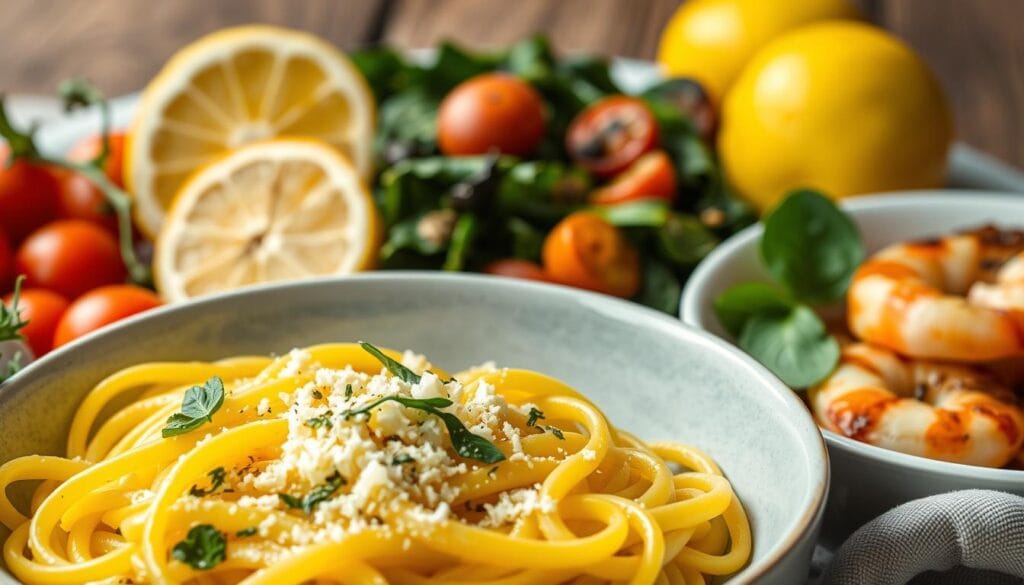
Adding a few creative touches can turn your lemon pasta into a masterpiece. The classic pasta al limone is a great starting point. It lets you play with flavors and ingredients based on what’s in season.
Fresh herbs can make your lemon pasta dishes pop. Here are some herbs to try:
- Basil: Adds a bright, peppery note
- Parsley: Brings a clean, fresh flavor
- Mint: Provides a surprising, cool undertone
Vegetables add texture and nutrients to your lemon pasta. Try these seasonal options:
- Asparagus spears in spring
- Roasted cherry tomatoes in summer
- Sautéed zucchini in late summer
For those who love protein, lemon pasta dishes can be enhanced. Grilled chicken, seared shrimp, or crispy pancetta make it more filling. Just remember to balance the protein so the lemon flavor stays bright.
Cheese can change the dish’s flavor profile. Try these:
- Pecorino Romano for a sharp, salty taste
- Parmigiano-Reggiano for a nutty depth
- A mix of both for a rich flavor
The charm of lemon pasta dishes is their flexibility. Each twist tells a new story while staying true to its Mediterranean roots.
Wine Pairing and Serving Suggestions
Enhancing your lemon pasta dishes is all about pairing and presentation. The right wine and garnishes can turn a simple meal into a memorable experience. Knowing how to match the bright, citrusy flavors of pasta al limone will impress your guests and boost your cooking skills.
Best Wine Selections
Finding the perfect wine for lemon pasta dishes is an art. Light, crisp white wines are best for the delicate citrus notes. Your top picks include:
- Pinot Grigio – A classic choice with refreshing acidity
- Sauvignon Blanc – Bright and zesty, matching the lemon’s profile
- Vermentino – A lesser-known but excellent Mediterranean wine
Garnishing Tips
A stunning presentation can make lemon pasta dishes stand out. Try these garnishing ideas:
- Sprinkle fresh lemon zest for intense citrus aroma
- Scatter finely chopped parsley or basil
- Add a light dusting of Parmigiano-Reggiano
Side Dish Recommendations
Pair your lemon pasta with light, fresh sides that won’t overwhelm the dish:
- Arugula salad with light vinaigrette
- Grilled asparagus with olive oil
- Roasted cherry tomatoes
The secret to serving lemon pasta is to do it quickly. Serve hot, straight from the pan, to keep the sauce creamy and flavors bright.
Storage and Reheating Guidelines
Your delicious lemon pasta needs the right care to keep its amazing flavor and texture. Freshly made is best, but you can still enjoy it later with smart storage tips.
Storing lemon pasta right is key to keep its creamy sauce and delicate taste. Here are some important tips to keep your dish tasty:
- Store lemon pasta in an airtight container
- Refrigerate within 2 hours of cooking
- Keep refrigerated for up to 3 days maximum
- Avoid leaving at room temperature for extended periods
Reheating lemon pasta needs a gentle touch to avoid sauce separation. Pro tip: Always add a small splash of water or extra butter when warming to revive the sauce’s smooth texture.
Here are the best ways to reheat your lemon pasta:
- Microwave with a tablespoon of water
- Stovetop warming in a non-stick pan
- Gentle oven heating at low temperature
“The secret to great leftover lemon pasta is treating it with care and patience.” – Culinary Expert
Remember, lemon pasta is best enjoyed fresh. While these storage methods work, they can’t fully match the magic of eating it right after it’s made.
Nutritional Benefits and Dietary Considerations
Lemon pasta dishes are more than tasty. They are part of a healthy diet with many benefits. The mix of fresh ingredients gives you important nutrients for well-being.
When you make your lemon pasta right, it can be very healthy. The main parts offer big health perks:
- Lemons have vitamin C, which helps your immune system
- Pasta gives you complex carbs for lasting energy
- Cheese adds calcium and protein
- Olive oil brings healthy fats
Lemon pasta dishes are great for different diets. You can change the recipe to fit your needs:
- Gluten-free folks can use other pasta
- Vegans can use nutritional yeast instead of cheese
- Low-carb eaters can choose zucchini noodles
- Those who want more protein can add grilled chicken or tofu
It’s important to watch your portion size. A serving of lemon pasta has about 350-450 calories. To keep your meal balanced, add a fresh salad or steamed veggies.
Smart eating is about enjoying delicious food while nourishing your body.
Your lemon pasta can be a healthy, tasty meal. Just use mindful ingredients and watch your portion sizes.
Conclusion
Your pasta al limone recipe journey shows the beauty of Italian cuisine’s simple elegance. This dish turns basic ingredients into a masterpiece. It highlights the Mediterranean’s cooking techniques.
Learning this recipe is more than just following steps. It’s about a cooking philosophy that values fresh ingredients and simplicity. Every time you make it, you can add your own twist while keeping its traditional charm.
Mastering pasta al limone connects you to a rich culinary tradition. It focuses on flavor, quality, and sharing meals with others. Whether it’s for a quick dinner or a special occasion, this dish always impresses.
As you explore Mediterranean cooking, remember that great dishes like pasta al limone come from passion and quality. Enjoy the process, trust your instincts, and savor every bite.