
Cast Iron Salmon – Easy, Delicious Pan Seared Salmon Recipe
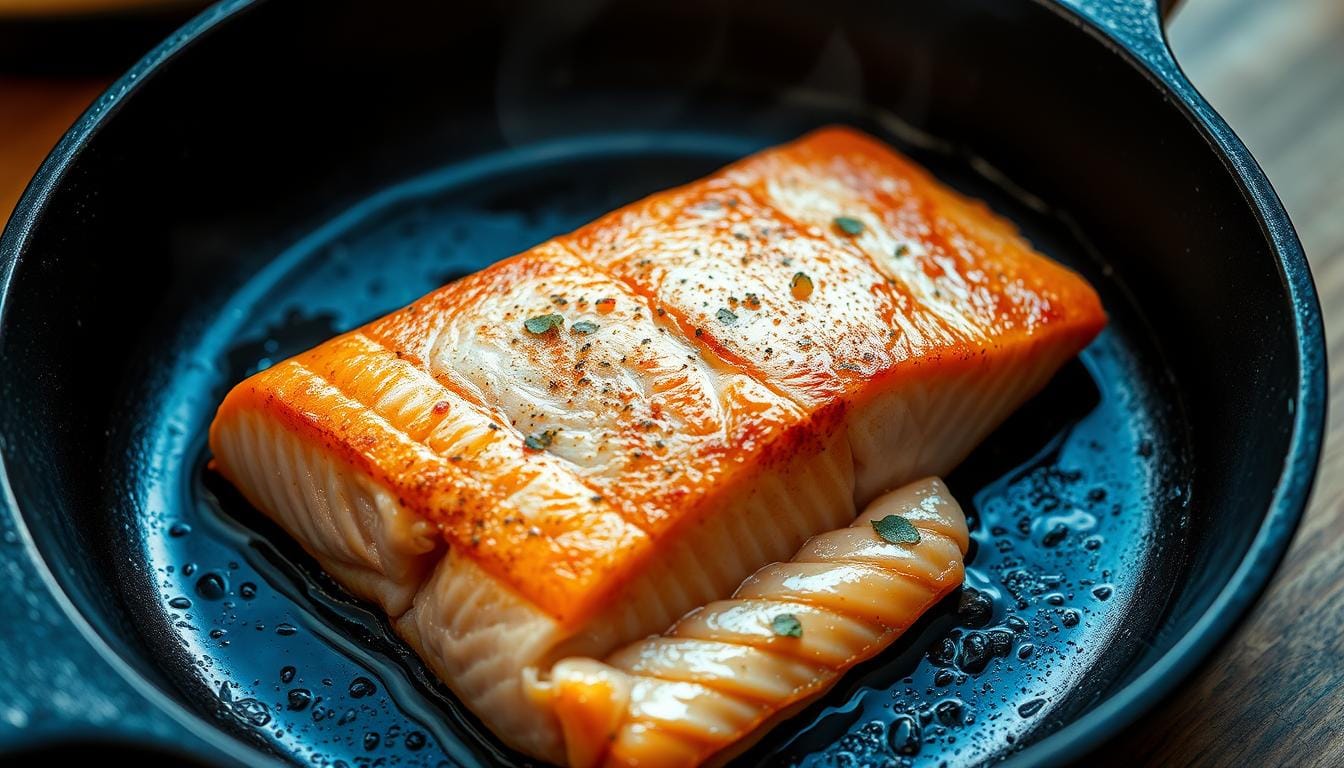
Every home cook dreams of making meals as good as those in restaurants. Cast iron salmon is one of those dishes that looks fancy but is surprisingly simple. Growing up, I watched my grandmother turn simple ingredients into amazing meals, always using her favorite cast iron skillet.
The sound of salmon hitting a hot pan is unforgettable — it’s the secret to a perfect pan seared salmon cast iron with crispy skin and tender, flaky meat. Cooking salmon in cast iron isn’t just about flavor; it’s a tradition that connects you to real, old-style cooking.
Whether you’re new to cooking or an experienced home chef, this guide will show you how to cook salmon in cast iron for restaurant-quality results every time. It’s an easy and satisfying recipe that transforms a simple fish into a show-stopping dinner.
Why Cast Iron is Perfect for Cooking Salmon
Learning to cook salmon in cast iron can change your cooking game. Cast iron pans have special qualities that make them perfect for salmon. They offer benefits that make your salmon dishes taste amazing.
Exceptional Cooking Benefits
Cast iron cookware is great for cooking salmon. It has qualities that make cooking better:
- Superior heat distribution
- Natural non-stick surface when properly seasoned
- Enhanced flavor development
- Durability that lasts generations
Remarkable Heat Performance
Cast iron pans keep heat well for cooking salmon. They create an even, consistent temperature. This helps get a golden-brown crust and keeps the inside tender.
Nutritional and Seasoning Advantages
Cast iron cookware has nutritional benefits. Cooking salmon in it can increase iron in your meal. The seasoning makes a non-stick surface that gets better with use.
Pro tip: A well-seasoned cast iron pan is the secret weapon for achieving restaurant-quality salmon at home.
Mastering cast iron cooking for salmon opens up a world of possibilities. It combines traditional techniques with great results.
Selecting the Best Salmon for Cast Iron Cooking
Choosing the right salmon is key for a tasty cast iron salmon dish. The flavor, texture, and cooking performance depend on it. The quality of your salmon makes or breaks your dish.
When you go shopping for salmon, you’ll find two main types: wild and farmed. Each has its own special qualities for cooking in a cast iron pan.
Wild vs. Farmed Salmon: Understanding the Difference
Wild salmon has some big advantages for cooking in a cast iron pan:
- More intense natural flavor
- Firmer muscle texture
- Lower fat content
- Higher nutritional density
Quality Indicators for Premium Salmon
When picking salmon for your cast iron pan, look for these signs of quality:
- Vibrant, uniform color
- Moist, glossy appearance
- Clean, ocean-fresh smell
- Firm flesh that springs back when touched
Top Salmon Varieties for Pan Searing
Some salmon types are better for cooking in a cast iron pan:
- Sockeye Salmon: Lean, robust flavor
- King Salmon: Rich, buttery texture
- Coho Salmon: Mild, delicate taste
Your choice of salmon can make your cast iron cooking amazing. Pick the right one, and you’ll have a meal that rivals a restaurant’s.
Essential Preparation Steps for Perfect Salmon
Learning to cook salmon in cast iron starts with preparation. The right steps before heating your pan are crucial. They help get a crispy outside and a tender, flavorful inside.
Start by picking fresh salmon. Look for vibrant color and firm texture. Then, pat the fish dry with paper towels. This step is key to getting that golden-brown sear.
- Remove salmon from packaging
- Pat dry with clean paper towels
- Air-dry in refrigerator for 15-30 minutes
- Check for any remaining moisture
Air-drying is a chef’s secret. Letting the salmon dry in the fridge removes surface moisture. This makes the skin crispier and cooking more even.
For seasoning, keep it simple. Use kosher salt and black pepper. For extra flavor, add a light coat of neutral oil. It helps with heat conduction and prevents sticking.
Pro tip: Room temperature salmon cooks more evenly than cold fish straight from the refrigerator.
Mastering Salmon in Cast Iron: Step-by-Step Guide
Cooking salmon in a cast iron skillet needs skill and precision. With the right steps, you can make a dish that wows your guests.
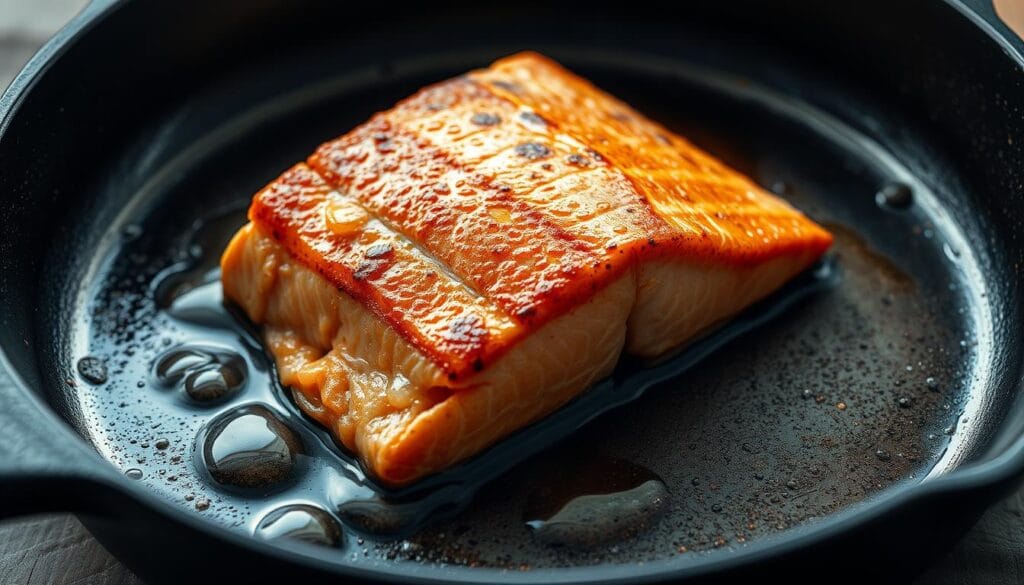
When cooking salmon in a cast iron pan, pay close attention to a few key points. These include controlling the temperature, seasoning, and timing.
Temperature Control Techniques
To get perfect pan seared salmon, managing heat is crucial. Make sure your cast iron skillet is hot before cooking.
- Preheat cast iron pan for 3-5 minutes
- Use medium-high to high heat setting
- Check pan temperature with water droplet test
Proper Seasoning Methods
Seasoning your salmon before cooking boosts flavor and makes a tasty crust. Dry the fish, then lightly coat it with oil and herbs.
| Seasoning Type | Recommended Herbs/Spices |
|---|---|
| Classic | Salt, black pepper, dill |
| Spicy | Paprika, cayenne, garlic powder |
| Mediterranean | Oregano, thyme, lemon zest |
Cooking Time Guidelines
Cooking times for salmon in cast iron vary based on thickness and desired doneness. Precision is key to preventing overcooking.
- Cook skin-side down for 4-6 minutes
- Flip salmon and cook 2-5 additional minutes
- Internal temperature should reach 145°F
Follow these steps, and you’ll make perfectly pan seared salmon in your cast iron skillet every time.
Best Seasonings and Marinades for Cast Iron Salmon
Turning your cast iron salmon into a standout dish starts with the right seasonings. The magic of cast iron salmon is how it soaks up and boosts flavors. It also keeps a crispy outside.
Classic seasonings can really make your salmon dish pop. Salt and pepper are the basics, letting the salmon’s natural flavor shine. A light sprinkle of kosher salt and freshly ground black pepper creates a simple yet delicious foundation for your cast iron salmon.
- Fresh herbs like dill, parsley, and thyme complement salmon’s delicate taste
- Citrus zests add brightness and cut through the fish’s richness
- Smoked paprika brings depth and complexity to cast iron salmon
For bolder flavors, marinades can make your cast iron salmon a true masterpiece. A honey-Dijon glaze is a perfect mix of sweet and tangy. Try mixing:
- 2 tablespoons Dijon mustard
- 1 tablespoon honey
- 1 teaspoon fresh lemon juice
- Pinch of garlic powder
Don’t be afraid to try global flavors to keep your cast iron salmon exciting. A Mediterranean mix with oregano and lemon, or an Asian marinade with soy and ginger, can make a simple dish unforgettable.
How to Achieve Crispy Salmon Skin
Learning to cook salmon in a cast iron skillet is all about making the skin crispy. The right method can turn a simple salmon dish into a gourmet meal with crunchy skin.
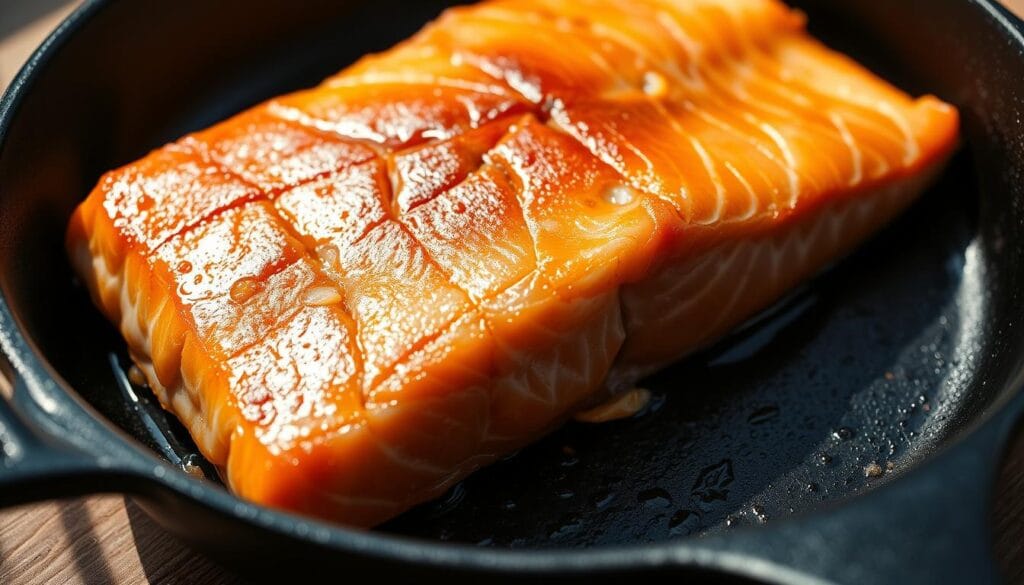
To get that crispy salmon skin, you need to prepare well and use the right cooking techniques in a cast iron skillet.
Moisture Control Strategies
Start by drying the salmon skin well with paper towels. This step is key to getting the skin crispy, not steamed.
- Use clean paper towels to remove excess moisture
- Allow salmon to sit at room temperature for 15 minutes before cooking
- Ensure skin is completely dry before seasoning
Oil Selection Guide for Perfect Crispiness
Choosing the right oil is crucial for crispy salmon skin. Use oils with a high smoke point for the best results.
| Oil Type | Smoke Point | Crispiness Rating |
|---|---|---|
| Avocado Oil | 520°F | Excellent |
| Grapeseed Oil | 420°F | Very Good |
| Canola Oil | 400°F | Good |
Pro tip: Heat your cast iron skillet until it’s scorching hot before adding oil. This ensures an immediate sear that creates the crispiest skin possible.
The secret to perfect crispy salmon skin is patience and high heat!
Common Mistakes to Avoid When Cooking Salmon
Cooking salmon in a cast iron oven can be tricky. Many home cooks make critical errors that compromise the quality of their fish. Understanding these common pitfalls will help you prepare a perfect salmon dish every time.
- Avoid flipping the salmon too frequently
- Prevent overcrowding in the cast iron pan
- Ensure proper pan temperature before cooking
- Use the correct amount of oil
One of the biggest mistakes is impatient flipping. When you cook salmon in a cast iron oven, let the fish develop a golden crust before turning. Constant movement prevents proper searing and can cause the delicate fish to break apart.
| Mistake | Consequence | Solution |
|---|---|---|
| Overcrowded Pan | Uneven cooking | Cook salmon in batches |
| Low Pan Temperature | Soggy skin | Preheat cast iron thoroughly |
| Incorrect Oil Amount | Sticking and burning | Use light, high smoke-point oil |
Temperature control is crucial when preparing cast iron salmon. Preheat your pan until it’s hot but not smoking. This ensures a crispy exterior while maintaining a tender interior. Remember that cast iron retains heat exceptionally well, so adjust your cooking technique accordingly.
Pro tip: Let your salmon rest at room temperature for 15 minutes before cooking to ensure even heat distribution.
Perfect Side Dishes for Cast Iron Salmon
Creating a memorable salmon cast iron grill meal is more than just the fish. The right side dishes can make your dinner unforgettable. Choosing sides that match the salmon’s flavors is key.
Your salmon needs sides that bring out its best taste. The goal is to have a balanced plate with different textures and tastes.
Vegetable Pairings That Shine
Vegetables are essential for a complete salmon cast iron grill meal. Here are some top picks:
- Roasted asparagus with garlic
- Sautéed spinach with lemon zest
- Grilled Brussels sprouts
- Honey-glazed baby carrots
Grains and Starches to Complement
Choosing the right grain or starch can make your dish unforgettable. Here are some great options:
- Crispy fried potatoes with herb seasoning
- Creamy wild rice pilaf
- Golden cornbread with a touch of honey
- Quinoa salad with fresh herbs
When making your salmon cast iron grill meal, balance is crucial. Pick sides that enhance the fish’s flavor without overpowering it. Aim for a harmonious plate that pleases your taste buds and is healthy.
How to Care for Your Cast Iron After Cooking Salmon
After cooking salmon, it’s key to care for your cast iron skillet. This keeps it in top shape and prevents fish smells. Your skillet needs special care to keep its non-stick surface.
Cleaning your skillet right after cooking salmon is important. Start by removing food bits when the pan is still warm. Don’t use soap, as it can remove the seasoning you’ve built up.
- Use a stiff brush or scraper to remove salmon residue
- Rinse with hot water
- Dry thoroughly with a clean kitchen towel
- Apply a thin layer of cooking oil to prevent rust
For tough salmon bits, try kosher salt. Sprinkle salt in the pan and scrub with a paper towel. This method cleans your skillet without harming the seasoning.
Pro tip: Always heat your pan slightly after cleaning to ensure it’s completely dry, preventing rust formation.
If seasoning is lost after cooking salmon, you can re-season your pan. Use a thin layer of oil like flaxseed or grapeseed. Then, bake it upside down in a 450°F oven for about an hour.
Remember: Consistent care transforms your cast iron from a simple cooking tool to a treasured kitchen companion.
Conclusion
Cooking salmon in a cast iron skillet makes your kitchen a special place. You learn how to make dishes that taste like they’re from a restaurant. Each new skill you learn makes you more confident in cooking this tasty seafood.
Starting with the best fish, controlling the heat, and using the right seasonings is key. Cast iron skillets cook food evenly and make the skin crispy while keeping the inside juicy. These skills turn cooking into an art.
Getting better at cooking salmon takes practice. Try different fish, seasonings, and cooking times. You’ll get better at using your cast iron skillet. Remember, every chef started somewhere, and your hard work will pay off.
Use your cast iron skillet to its fullest and enjoy the possibilities of salmon. With patience and care, you’ll make meals that impress everyone. Your cooking journey is just starting.