
How To Cook Sockeye Salmon – Simple, Healthy & Delicious
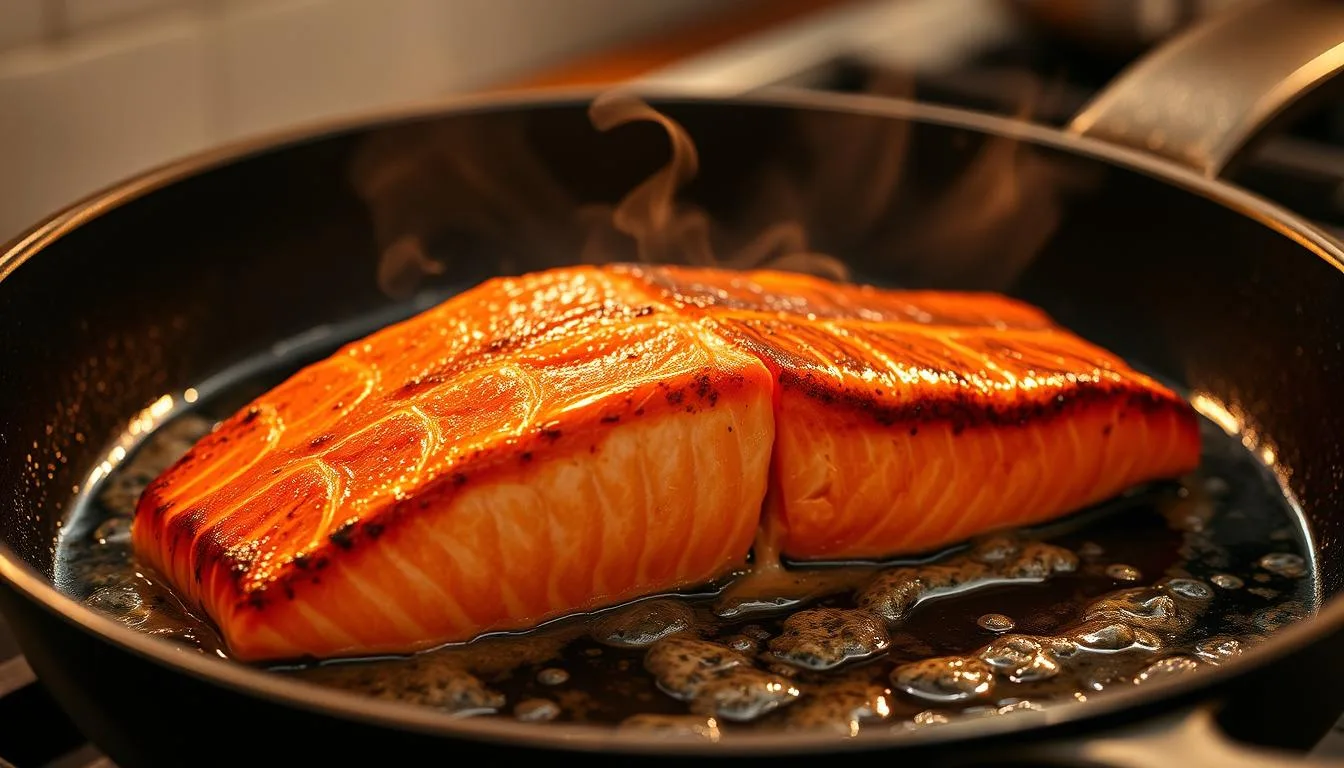
Every time I step into my kitchen with a beautiful fillet of wild sockeye salmon, I’m reminded of the pristine waters of Alaska. These incredible fish swim there. Cooking sockeye salmon is more than just preparing a meal. It’s about turning a pure, nutrient-rich ingredient into a culinary masterpiece that nourishes both body and soul.
If you’ve ever wondered how to cook sockeye salmon perfectly, you’re in the right place. Wild sockeye salmon is more than just a protein source. It’s a celebration of ocean-fresh quality that can elevate your home cooking experience.
Sourced from the Northern Pacific Ocean, this vibrant red fish offers a robust, meaty flavor. This flavor sets it apart from other salmon varieties. Whether you’re a seasoned home chef or a cooking novice, learning to prepare sockeye salmon will unlock a world of delicious, heart-healthy meals.
Understanding Sockeye Salmon’s Unique Characteristics
Explore the world of sockeye salmon, a true culinary gem. These vibrant red fish add more than just great taste to your dishes. They also pack a nutritional punch that can boost your health.
What Makes Sockeye Different from Other Salmon
Sockeye salmon, also known as red salmon, has some standout features:
- Intense bright red coloration during spawning season
- Distinctive rich, deep flavor profile
- Smaller size compared to other salmon species
- Primarily found in Pacific Northwest waters
Nutritional Benefits of Wild Sockeye
Adding wild sockeye salmon to your diet is a smart choice. It’s loaded with nutrients that offer great health benefits:
- High omega-3 fatty acid content
- Excellent source of vitamin D
- Complete protein with low saturated fat
- Rich in selenium and B vitamins
Selecting the Best Quality Sockeye
Here are some tips for choosing the best sockeye salmon:
- Look for bright, vibrant red or deep orange coloration
- Check for firm, smooth flesh without discoloration
- Smell should be fresh and oceanic, not fishy
- Choose wild-caught over farm-raised when possible
Pro tip: Fresh sockeye salmon should have a clean, sea-like aroma that hints at its pristine origins.
Essential Kitchen Tools and Ingredients
Getting ready to cook sockeye salmon means having the right tools and ingredients. Your kitchen setup is key to making a tasty meal. It highlights the salmon’s rich flavor and soft texture.
Must-Have Kitchen Tools
- Cast-iron skillet for perfect searing
- Instant-read thermometer for precise doneness
- Sharp chef’s knife for clean fish preparation
- Non-stick baking sheet for oven cooking
- Flexible fish spatula
Quality tools make a big difference when cooking sockeye salmon. A cast-iron skillet is great for even heat. It creates a golden crust that keeps the salmon’s juices in.
Essential Ingredients
- Extra virgin olive oil
- Fresh lemon
- Sea salt and freshly ground black pepper
- Fresh herbs like dill or parsley
- Garlic cloves
“The right tools and fresh ingredients are the foundation of an exceptional sockeye salmon dish.” – Professional Chef
Choosing the right ingredients can turn a simple sockeye salmon recipe into a gourmet dish. Fresh, quality ingredients bring out the fish’s natural flavors. They make for a memorable meal.
How to Cook Sockeye Salmon
Cooking sockeye salmon is fun and tasty when you know the right ways. It’s easy for anyone to learn how to cook sockeye salmon. Each method brings out different flavors and textures, offering many ways to enjoy this healthy fish.
Learning to cook sockeye salmon reveals three main methods. These methods help you make a delicious baked sockeye salmon recipe or try other cooking styles. They fit your taste and kitchen needs.
Pan-Seared Salmon Method
Pan-searing is quick and flavorful for cooking sockeye salmon. Here’s how to do it right:
- Pat salmon fillets dry with paper towels
- Season with salt and pepper
- Heat skillet with olive oil over medium-high heat
- Cook skin-side down for 5-6 minutes
- Flip and cook for an additional 1-2 minutes
Baked Sockeye Salmon Recipe
Baking is a simple way to cook salmon. It cooks evenly and is easy to clean up. Here’s a basic baked sockeye salmon recipe:
- Preheat oven to 400°F
- Line baking sheet with parchment paper
- Place salmon fillets on sheet
- Drizzle with olive oil and seasonings
- Bake for 12-15 minutes until fish flakes easily
Poaching Technique
Poaching is a gentle way to cook salmon. It keeps the fish moist and delicate. It’s great for a lighter dish:
| Ingredient | Quantity |
|---|---|
| Water or broth | 4 cups |
| Salmon fillet | 1-2 pieces |
| Cooking time | 8-10 minutes |
Remember, the key is not to overcook. Sockeye salmon cooks fast and tastes best when it’s slightly soft in the middle.
Perfect Temperature and Timing Guide
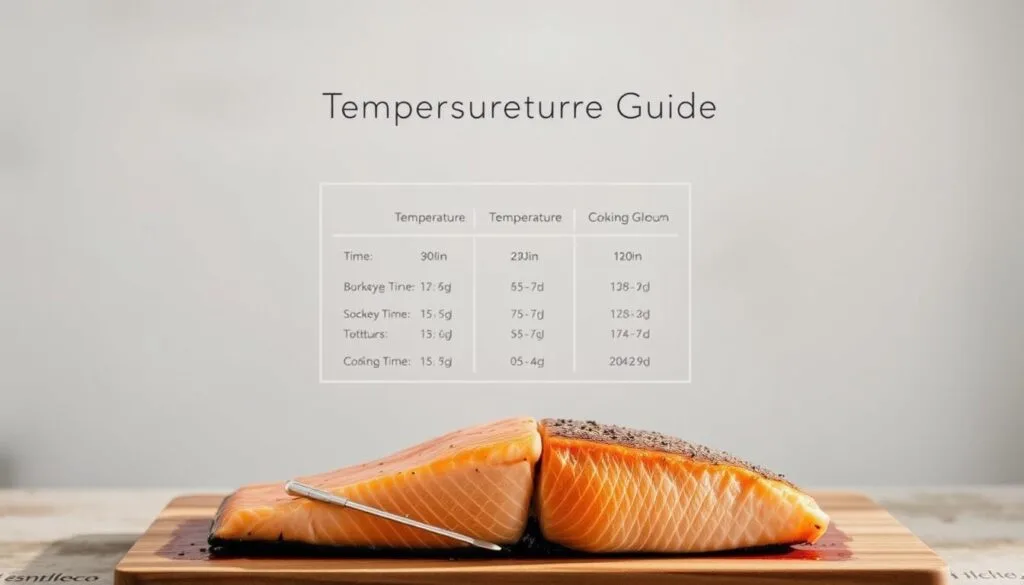
Learning how to cook sockeye salmon right is all about precision and temperature control. The secret to great salmon is watching the internal temperature closely as it cooks.
Experts say using a meat thermometer is the best way to know when your salmon is done. Each level of doneness has its own temperature range:
- Rare: 115°F to 120°F
- Medium-Rare: 120°F to 125°F
- Medium: 125°F to 130°F
- Well-Done: 135°F to 140°F
Take the salmon off the heat when it hits 120°F to 125°F. It will keep getting hotter as it rests. Cooking it too long can make it dry and tough, losing its rich flavor.
“The perfect sockeye salmon is cooked with patience and precision” – Pacific Northwest Cooking Association
Most cooking methods take about 8-10 minutes. Thinner fillets cook faster, while thicker ones might need up to 12 minutes. Adjust the time based on your fillet’s thickness and cooking method.
Seasoning and Flavor Combinations
Understanding seasoning is key to making great sockeye salmon recipes. The bold flavor of wild sockeye salmon is perfect for creative cooking. Your choice of seasonings can turn a simple dish into a memorable meal.
Creating the right flavor mix is about balancing the salmon’s taste with other ingredients. You want to add to the fish’s flavor without overpowering it.
Basic Seasoning Options
Begin with classic seasoning mixes that bring out the best in sockeye salmon:
- Sea salt and freshly ground black pepper
- Lemon zest and dill
- Garlic powder and dried herbs
- Smoked paprika for a subtle smoky touch
Marinades and Glazes
Marinades add depth and complexity to sockeye salmon recipes:
| Marinade Type | Key Ingredients | Flavor Profile |
|---|---|---|
| Asian-Inspired | Soy sauce, ginger, honey | Sweet and umami |
| Mediterranean | Olive oil, lemon, oregano | Bright and herbaceous |
| Maple Mustard | Dijon mustard, maple syrup | Rich and tangy |
Herb and Spice Pairings
Try these herb and spice mixes for unique sockeye salmon recipes:
- Fresh herbs: Rosemary, thyme, parsley
- Warming spices: Cumin, coriander, smoked paprika
- Citrus-based: Lime zest, orange peel, fresh cilantro
The secret to amazing sockeye salmon recipes is finding the right flavor balance. Don’t hesitate to try new seasoning combinations to find your favorite.
Tips for Achieving the Perfect Texture
Getting the perfect texture with sockeye salmon is all about technique and timing. The right steps can turn your salmon into a moist, flaky, and tasty meal every time.
Temperature is key when cooking sockeye salmon. Before cooking, let the salmon sit at room temperature for 15-20 minutes. This helps it cook evenly and keeps the outside from getting tough while the inside stays juicy.
- Pat the salmon dry with paper towels to remove excess moisture
- Ensure the fish is at room temperature before cooking
- Use a light touch when handling the salmon
For crispy skin, start with a dry surface and a hot pan with a bit of oil. Press the salmon gently with a spatula to make sure it cooks evenly.
| Cooking Method | Ideal Texture | Cooking Time |
|---|---|---|
| Pan-Searing | Crispy exterior, moist interior | 3-4 minutes per side |
| Baking | Evenly cooked, flaky | 12-15 minutes at 400°F |
| Poaching | Delicate, tender | 8-10 minutes |
Remember, carryover cooking is important. Salmon cooks a bit more after it’s removed from heat. So, slightly undercook it. Aim for a slightly translucent center and a 125°F temperature for medium-rare. It will reach the perfect doneness while resting.
By using these tips, you’ll improve your sockeye salmon cooking skills. You’ll make a dish that looks great and tastes amazing.
Common Cooking Mistakes to Avoid
Cooking sockeye salmon can be tricky, even for experienced home chefs. Knowing common mistakes helps you make a perfect dish every time. To cook sockeye salmon well, you need precision and attention to detail.
Temperature Control Challenges
Keeping the right temperature is key when cooking sockeye salmon. Cooking it too hot can dry out the fish, ruining its tender texture. Start with medium-high heat and watch closely when learning to cook sockeye salmon.
- Avoid overheating your pan or oven
- Use a cooking thermometer to monitor temperature
- Preheat cooking surfaces gradually
Seasoning Missteps
Sockeye salmon has a rich, natural flavor that can be easily lost. Careful seasoning helps keep the fish’s delicate taste when cooking sockeye salmon.
- Use light, complementary seasonings
- Avoid over-salting
- Experiment with subtle herb combinations
Timing Troubles
Overcooking is the most common mistake when preparing sockeye salmon. Precision is key to keeping the fish moist and tender.
- Cook for 3-4 minutes per side
- Let salmon rest after cooking
- Check doneness by flaking with a fork
By avoiding these common mistakes, you’ll master the art of cooking sockeye salmon. You’ll create restaurant-quality meals in your own kitchen.
Serving Suggestions and Side Dishes
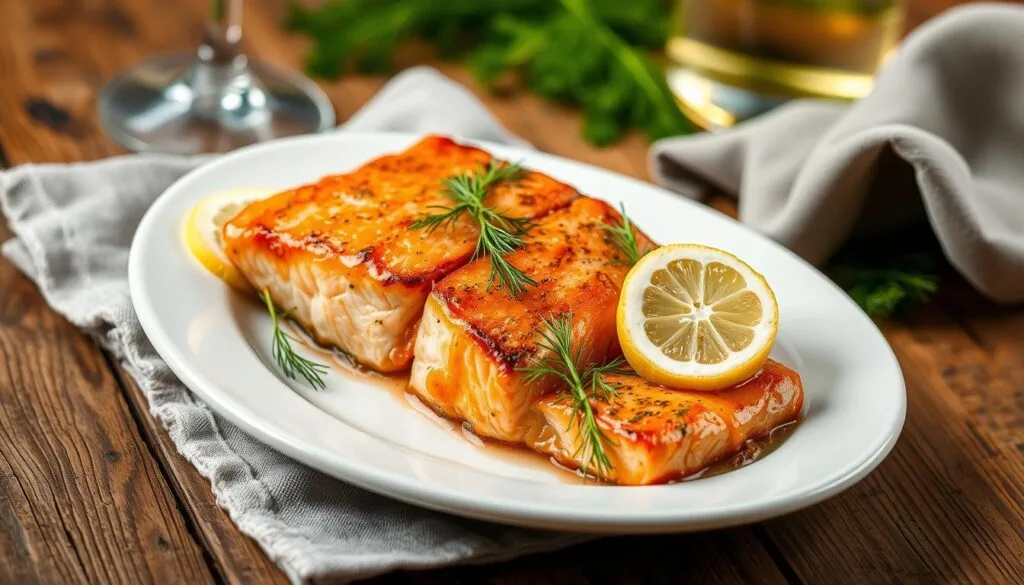
To make your baked red salmon a memorable meal, pair it with the right sides and flavors. Aim for a balanced plate that showcases the sockeye salmon’s rich taste.
Your baked red salmon will stand out with the right sides. Here are some tasty options to round out your meal:
- Roasted vegetable medley with asparagus and Brussels sprouts
- Creamy lemon-herb quinoa
- Light Mediterranean-style salad
- Garlic-infused wild rice
Wine pairings can elevate your meal. Crisp white wines like Sauvignon Blanc or Pinot Grigio pair well with the salmon. If you prefer red, a light Pinot Noir is a great choice.
Choosing the right sauce can make your dish unforgettable. Here are some simple yet elegant options:
- Dill and yogurt sauce
- Citrus-butter reduction
- Honey-mustard glaze
Don’t forget about presentation. Arrange your baked red salmon with colorful sides. This will make your plate as pleasing to the eye as it is to the taste buds.
Conclusion
Cooking sockeye salmon can make your meals at home truly special. You now know how to prepare this healthy fish in various ways. Whether you pan-sear, bake, or poach, you’ll always make tasty dishes.
It’s not just about following recipes. It’s about knowing the fish, choosing the right ingredients, and mastering your technique. Each method gives a unique taste and texture, letting you find your favorite way to cook it.
Your adventure with sockeye salmon is just starting. Try new seasonings, marinades, and cooking methods. With practice, you’ll soon make salmon dishes that rival those from restaurants. Remember, the secret to success is keeping an eye on temperature, timing, and freshness.
Enjoy the health perks and amazing flavor of sockeye salmon. With time and effort, you’ll become a pro at making delicious, healthy fish dishes. Your family and friends will be impressed.